Category Archives: North America

Fracking Debate: How Once-Cooperative Attitudes Died

Many U.S. states with stalled fracking legislation — and probably some countries — are watching as comprehensive regulatory plans for hydraulic fracturing unfold in Illinois and California. A year ago, Illinois state legislators, industry officials and environmentalists appeared to be getting along as the state’s first regulations for the natural gas drilling process were passed, but good relations have since dissolved in mistrust. In California, after some relative harmony early on, environmental groups are trying to put the brakes on pending legislation in favor of further study. Any surprises here, as lawmakers struggle with “comprehensive” regs that try to please everyone? Not so much. Associated Press business writer Tammy Webber does a nice job of describing the situations.

RELATED NEWS: Duke fracking tests reveal dangers driller’s study missed in Texas – Bloomberg

See previous posts:

Drilling Down on Fracking: Latest News Plus Background (Jan. 6, 2014)

Fracking Across the Pond: In the UK (Jan 8, 2014)

Leave a comment

Filed under Environment, Fracking, Groundwater, Industry, North America, Pollution, Technology

UPDATED: Dangers of Leaked Chemical in West Virginia Remain a Disturbing Mystery

chemicals

About 300,000 residents of eight counties in West Virginia were told on Thursday not to drink, cook or wash with tap water (but they can still flush it down the toilet or put out a fire with it, officials added — what a relief). About 7,500 gallons of an industrial solvent used to clean coal had seeped from a ruptured holding tank into the Elk River. As of Monday morning, water tests had showed improvement, but the ban is still in place.

One of the most disturbing facts about the story is that the risks to health posed by the chemical, 4-methylcyclohexane methanol, or MCHM, are poorly understood. Science writer Deborah Blum reports for Wired.com on her frustrating search for information. David Biello sheds some light on the basic properties of the compound, which is a type of alcohol, in Scientific American.

The stories, and the comments attached, raise other important questions, directly or indirectly. How long had the tank been leaking, and how does such a failure go undetected, even for a day? (There are supposed to be alarms and other safety protocols.) How much of the chemical have residents already ingested, and what health issues could result? How culpable are the tank’s owner, Charleston-W. Va.-based Freedom Industries, and the state of West Virginia? The state gets a lot of grief for under-regulating the powerful coal industry.  (And further, in what world does it seem OK to have such chemical tanks just upriver from a water system’s intake pipes? What can the EPA do? Can “Freedom Industries” be cited for its name alone? One can only hope).

Blum also brings up the 35-year-old Toxic Substances Control Act, saying it hasn’t been updated and strengthened in all that time. Why? And, of course, what will change as a result of this spill? Unfortunately, it often takes a nightmare to wake people up to the need for action.

Read more:

UPDATE: Chemical spill muddies picture in a state wary of regulationsThe New York Times

UPDATE: Critics say spill highlights lax West Virginia regulationsThe New York Times

OP-ED: A predictable water crisis due in part to “audacious influence of industry” – Sunday Gazette-Mail

UPDATE: Hope flows as W. Va. water  showing signs of improvement after spill – NBCNews.com

The wait continues for safe tap water in West VirginiaThe New York Times

Freedom Industries cited for Elk chemical spillSaturday Gazette-Mail

Chemical guesswork in West Virginia – Wired.com

How dangerous is the coal-washing chemical spilled in West Virginia?Scientific American

Thousands of residents warned not to use water – wvgazette.com

2 Comments

Filed under Environment, North America, Pollution, Rivers and Watersheds

To the Rescue in California? Solar-Powered Desalination

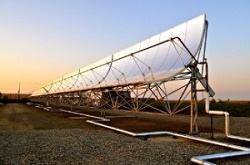
solar desal water fx

Image: WaterFX

When you hear about desalination, it’s usually about a large-scale effort to transform seawater to freshwater through the process of reverse osmosis. In other words, an industrial plant is built in a terribly dry place at considerable expense, and salt water is pumped in and forced through membranes to create much-less-salty water (to oversimplify). But there is another, completely different process that separates salt and other things from water using a “solar still.”

Solar desalination technology isn’t new, but a company called WaterFX* is trying to put it to a new use in water-challenged California, and, potentially, everywhere, according to an interesting article in Forbes (link below). The company’s effort is about selling its scalable Aqua 4 system to growers and water districts, who can use it to recapture, purify and reuse agricultural run-off (that is, the copious amount of water used for irrigation that picks up salts, fertilizer and other impurities that make it problematic to reuse without damaging crop yields). The company’s small-scale pilot project with California’s  Panoche Water District was able to produce nearly 500 gallons of clean water per hour, and the district plans to launch a larger project with the company, according to the article below.

Read more about how the sytem works in Peter Kelly-Detwiler’s* piece for Forbes.

Read more about WaterFX* at its website.

(*Note: Peter Kelly-Detwiler is a partner at NorthBridge Energy Partners, LLC. This post is not an endorsement of that organization or of WaterFX.)

Leave a comment

Filed under Agriculture, Conservation, Desalination, Industry, North America, Technology, Water Resources, Water Shortage

Drilling Down on Fracking: Latest News Plus Background

Image: insurancequotes.org

Image: insurancequotes.org

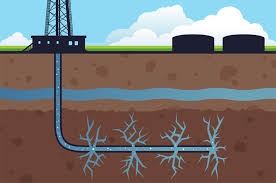
Not to be too Mr. Moto* about it, but it’s no exaggeration to say that the expansion of fracking, aka hydraulic fracturing, has been extremely controversial. The relatively new drilling practice, developed about 60 years ago but widely employed only within the past decade or so, involves pumping hundreds of thousands of gallons of water, sand and chemicals into the ground at each drill site to break up shale and release natural gas that had previously been inaccessible. It’s the subject of much protest over groundwater contamination and other potential ill effects. The fracking industry says the practice is safe and praises it for reducing oil imports, while environmental activists loudly warn of eco-catastrophe-for-profit and a disastrous delay in the quest for renewable energy sources amid worsening global warming.

Perhaps you’ve seen actor Mark Ruffalo at the anti-fracking forefront (here’s his CNN opinion piece with Greenpeace exec Phil Radford, from April 2013). And then there’s the feature film “Promised Land,” written by stars Matt Damon and John Krasinski and directed by Gus Van Sant. Previously, Josh Fox’s HBO documentaries about the largely unregulated industry, “GasLand” and “GasLand 2,” saw some acclaim. The fracking industry responded in kind, underwriting the film “TruthLand,” a pro-industry rebuttal to Fox. The likes of Popular Mechanics Scientific American and Discover have tried to clarify points of contention.

Meanwhile, a new study finds that more than half of Americans still know nearly nothing about fracking (below). I, for one, still have a lot to learn. It strikes me as an under-policed industry racing for purchase and profit ahead of federal, state and local regulation that should, eventually, mitigate fear and damage done — hopefully sooner than later (again, Mr. Moto speaks). But some say it’s already too late for regulation, and only bans will be effective.

Recent fracking news:

Fracking contamination found in water wells in 4 states – The Associated Press

In at least four U.S. states that have nurtured the nation’s energy boom, hundreds of complaints have been made about well-water contamination from oil or gas drilling, and pollution was confirmed in a number of them, according to a review of complaints in Pennsylvania, Ohio, West Virginia and Texas that casts doubt on industry suggestions that such problems rarely happen. The lack of detail in some state reports could help fuel public confusion and mistrust.

U.S. EPA unlikely to step up fracking enforcement efforts for now, say analysts – Reuters

Federal regulators are unlikely to step up enforcement of potential water contamination cases linked to natural gas drilling — despite new concerns about water safety — given a lack of political will and limited resources to pursue such cases, analysts said.

Study shows fracking is bad for babies – Bloomberg

Researchers from Princeton University, Columbia University and the Massachusetts Institute for Technology looked at Pennsylvania birth records from 2004 to 2011 to assess the health of infants born within a 2.5-kilometer radius of natural-gas fracking sites. They found that proximity to fracking increased the likelihood of low birth weight by more than half, from about 5.6% to more than 9%. The chances of a low Apgar score, a summary measure of the health of newborn children, roughly doubled, to more than 5%.

Study finds few know what fracking really is – Caspar Star-Tribune (Wyoming, U.S.)

A survey published by researchers at Oregon State, George Mason and Yale universities found that more than half of respondents reported knowing little or nothing of fracking. And almost 60% said they had no opinion on the subject.

Colorado communities could ban fracking under new proposed amendment – The Huffington Post

A proposed amendment to Colorado’s constitution that would give municipalities the power to ban or restrict fracking and other industrial activities would be the first of its kind nationwide if it passes.

(*Moto = Master of the Obvious)

Leave a comment

Filed under Environment, Fracking, Groundwater, Industry, North America, Pollution, Research, Technology

Dec. 18, 2013: What’s in Your Water?

Water_pollution

Image: U.S. EPA

Today I’m posting a short roundup of international news about substances found in the water.

Hormone-disrupting chemicals found in water at fracking sites

A study of hydraulic fracturing sites in Colorado finds substances that have been linked to infertility, birth defects and cancer. (United States)

Ontario’s Grand River loaded with artificial sweeteners, study finds

It’s so chock full of artificial sweeteners that scientists say the chemicals can be used to track the movement of treated waste in the region’s municipal water supplies. (Canada)

Communication, cooperation key to water issues in Africa and Asia

Despite radically different cultures, climate, geography, and levels of government involvement in improving the lives of its citizens, Ethiopia, India, and China all face similar issues of water sanitation and hygiene. (Africa, Asia)

EPA drills wells to test groundwater contamination

As scientists home in on the source of contamination near Texas’ Donna Reservoir Superfund site, they drilled new wells this week to test the groundwater. (U.S.)

Pollution takes a toll on aquatic life in 150 river stretches

Discharge of untreated water in India has left 150 river stretches across the country too polluted to support any aquatic life. (India)

Judge approves $165 million settlements in Passaic River pollution case

A New Jersey judge has approved a pair of settlements worth $165.4 million to the state from nearly 300 companies, towns and public agencies accused of polluting the Passaic River. (U.S.)

Leave a comment

Filed under Asia, Environment, Law, North America, Pollution, Rivers and Watersheds

Upcoming EPA Study Finds Lots of Drugs in U.S. Drinking Water

Image

Excuse me, my fellow American, but your drugs are in my tap water. And my drugs are in yours. The New Republic published an in-depth story today detailing the findings of major upcoming study: There are more pharmaceuticals in American tap water than drug companies thought possible. The estimates drug makers are required to make about their products’ environmental impact have been off the mark, at least in some cases, apparently.

Researchers have been looking at the issue for about 10 years. It’s not news that the drugs flushed down people’s toilets have an impact on aquatic life. For example, trace amounts of hormonal drugs mess with frog and fish reproduction, and even gender characteristics. But this study, conducted by the U.S. Environmental Protection Agency and slated for January release in the journal Environmental Pollution, paints a clearer picture.

The study, the largest of its kind ever conducted, shows surprisingly high levels of a surprisingly wide range of drugs. It tested water from 50 large waste-water treatment plants for 56 prescription and over-the-counter drugs. It found at least 25 drugs in more than half of the samples. The leading drug class? Blood pressure medications.

Unfortunately, key questions about the situation remain unanswered so far, as the New Republic article indicates. Namely, what are the drugs doing to human health and ecosystems? What further testing and new regulatory conditions need to be put in place, and by whom? Is it feasible to remove the drugs? It’s all very murky, but the EPA and the Food and Drug Administration are working on additional studies.

Image: PD-US (public domain).

Leave a comment

Filed under Environment, North America, Research, Wastewater Treatment

Drying Up: 11 U.S. Cities May Run Out of Water by Midcentury

In case you missed it: The Huffington Post reported last week on the water woes of 11 U.S. cities that could run out water by around 2050 — including some that might be surprising to you. Drawing on recent reports from NOAA’s Cooperative Institute for Research in Environmental Sciences and the Columbia University Water Center, and quoting some of the authors,  HuffPo’s Matt Ferner pointed out that water shortage issues could impact much more of the U.S. during the same time frame. This list simply covers 11 major cities, in order by population below.

The cities:

11. Salt Lake City, Utah

10. Lincoln, Neb.

9. Cleveland, Ohio

8. Miami, Fla.

7. Atlanta, Georgia

6. Washington, D.C.

5. El Paso, Texas

4. San Antonio, Texas

3. San Francisco Bay Area, Calif.

2. Houston, Texas

1. Los Angeles, Calif.

Read the full story, with links to the research materials.

Leave a comment

Filed under Environment, North America, Research, Water Shortage