Category Archives: Research

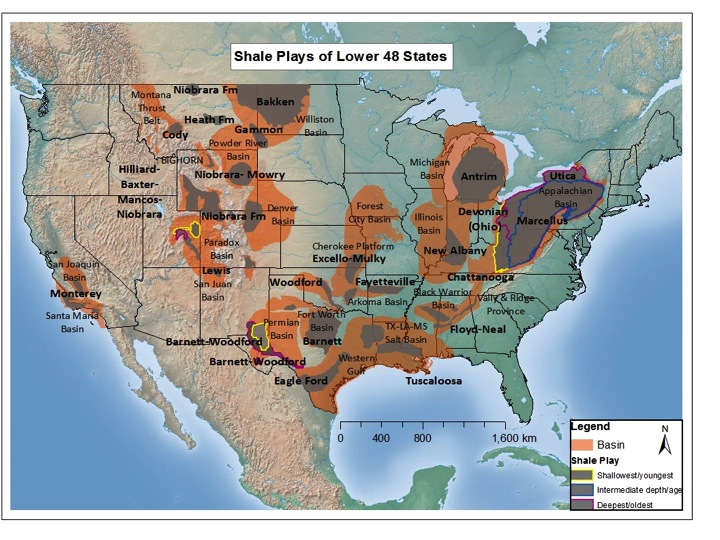
U.S. Shale Map: Could Be a Lot of Fracking Drilling in the Lower 48

Image: Duke University

Image: Duke University

See the website for the Duke University study on shale gas and fracking, Avner Vengosh research group, Duke Nicholas School of the Environment.

OTHER RELATED LINKS AND POSTS:

Duke study suggests cutting fracking waste’s radioactivity with acid drainage from mines – The Associated Press (Jan. 13, 2014)

Duke fracking tests reveal dangers driller’s study missed in Texas – Bloomberg (Jan.  10, 2014)

Drilling Down on Fracking: Latest News Plus Background (Jan. 6, 2014)

Fracking Across the Pond: In the UK (Jan 8, 2014)

Leave a comment

January 14, 2014 · 10:26 am

On Tap Monday: Annual UN Water Conference in Spain

Image: UN Water

Image: UN Water

UN Water’s annual conference in Zaragoza, Spain, runs Monday, Jan. 13 through Thursday, Jan 16. This edition plumbs the depths of the relationship of water and energy as a run-up to World Water Day. The small city of Zaragoza is roughly midway between Madrid and Barcelona. I can’t make it to there myself, but I will be on the lookout for interesting news trickling out of the meetings.

As with a lot of UN endeavors, the full name and description of the event are a mouthful (and you can read much, much more fairly dry stuff at the website): 2014 UN-Water Annual International Zaragoza Conference. Preparing for World Water Day 2014: Partnerships for improving water and energy access, efficiency and sustainability.

Or, because it’s easier to navigate and gives a sense of the topics, you can just read the agenda.

World Water Day is March 22. Of course it has its own website, too.  The main “celebrations” — which include the release of a report and the bestowing of an award — will take place in Japan.

Leave a comment

Filed under Conservation, Environment, Europe, Events, Human rights, Industry, Research, Sustainability, Technology, United Nations, Wastewater Treatment, Water Resources, Water Shortage

Fracking Over the Pond: In the UK

Seismic fracturing, aka fracking, is controversial in the U.S. Proponents say the natural gas drilling method creates jobs and reduces reliance on foreign oil; opponents say it’s a filthy polluter and the consequences of it have yet to be known because not enough research has been done and not enough regulation is in place. The links from The Telegraph and The Guardian below are not direct responses to each other, but they are two sides of a coin, Should Britain follow the U.S.?

Torries: Do you realise fracking is nastier and messier than wind turbines? – Jenny Jones, The Telegraph

Why the UK should embrace fracking – Chris Breitling, CFO, Breitling Energy Corporation, vis a vis The Guardian

News UPDATE, Jan. 13: PM Cameron promises tax boost as incentive to drill – BBC News

Leave a comment

Filed under Fracking, Groundwater, Industry, Pollution, Research, Technology, Water Resources

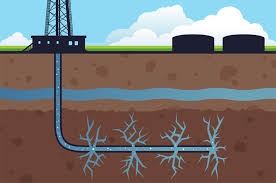
Drilling Down on Fracking: Latest News Plus Background

Image: insurancequotes.org

Image: insurancequotes.org

Not to be too Mr. Moto* about it, but it’s no exaggeration to say that the expansion of fracking, aka hydraulic fracturing, has been extremely controversial. The relatively new drilling practice, developed about 60 years ago but widely employed only within the past decade or so, involves pumping hundreds of thousands of gallons of water, sand and chemicals into the ground at each drill site to break up shale and release natural gas that had previously been inaccessible. It’s the subject of much protest over groundwater contamination and other potential ill effects. The fracking industry says the practice is safe and praises it for reducing oil imports, while environmental activists loudly warn of eco-catastrophe-for-profit and a disastrous delay in the quest for renewable energy sources amid worsening global warming.

Perhaps you’ve seen actor Mark Ruffalo at the anti-fracking forefront (here’s his CNN opinion piece with Greenpeace exec Phil Radford, from April 2013). And then there’s the feature film “Promised Land,” written by stars Matt Damon and John Krasinski and directed by Gus Van Sant. Previously, Josh Fox’s HBO documentaries about the largely unregulated industry, “GasLand” and “GasLand 2,” saw some acclaim. The fracking industry responded in kind, underwriting the film “TruthLand,” a pro-industry rebuttal to Fox. The likes of Popular Mechanics Scientific American and Discover have tried to clarify points of contention.

Meanwhile, a new study finds that more than half of Americans still know nearly nothing about fracking (below). I, for one, still have a lot to learn. It strikes me as an under-policed industry racing for purchase and profit ahead of federal, state and local regulation that should, eventually, mitigate fear and damage done — hopefully sooner than later (again, Mr. Moto speaks). But some say it’s already too late for regulation, and only bans will be effective.

Recent fracking news:

Fracking contamination found in water wells in 4 states – The Associated Press

In at least four U.S. states that have nurtured the nation’s energy boom, hundreds of complaints have been made about well-water contamination from oil or gas drilling, and pollution was confirmed in a number of them, according to a review of complaints in Pennsylvania, Ohio, West Virginia and Texas that casts doubt on industry suggestions that such problems rarely happen. The lack of detail in some state reports could help fuel public confusion and mistrust.

U.S. EPA unlikely to step up fracking enforcement efforts for now, say analysts – Reuters

Federal regulators are unlikely to step up enforcement of potential water contamination cases linked to natural gas drilling — despite new concerns about water safety — given a lack of political will and limited resources to pursue such cases, analysts said.

Study shows fracking is bad for babies – Bloomberg

Researchers from Princeton University, Columbia University and the Massachusetts Institute for Technology looked at Pennsylvania birth records from 2004 to 2011 to assess the health of infants born within a 2.5-kilometer radius of natural-gas fracking sites. They found that proximity to fracking increased the likelihood of low birth weight by more than half, from about 5.6% to more than 9%. The chances of a low Apgar score, a summary measure of the health of newborn children, roughly doubled, to more than 5%.

Study finds few know what fracking really is – Caspar Star-Tribune (Wyoming, U.S.)

A survey published by researchers at Oregon State, George Mason and Yale universities found that more than half of respondents reported knowing little or nothing of fracking. And almost 60% said they had no opinion on the subject.

Colorado communities could ban fracking under new proposed amendment – The Huffington Post

A proposed amendment to Colorado’s constitution that would give municipalities the power to ban or restrict fracking and other industrial activities would be the first of its kind nationwide if it passes.

(*Moto = Master of the Obvious)

Leave a comment

Filed under Environment, Fracking, Groundwater, Industry, North America, Pollution, Research, Technology

Groups Slap Nestle’s Human Rights Assessment as ‘PR Stunt’

Image: Nestle S.A.

Image: Nestle S.A.

Several non-governmental organizations (NGOs) are criticizing Nestlé’s recently released human rights impact report as a PR stunt that overlooks the human right to water, among other allegations, reports Caroline Scott-Thomas of FoodNavigator.com.

Vevey, Switzerland-based Nestlé, the world’s largest food company, had trumpeted that its report, released just before International Human Rights Day, was the first of its kind from a multinational corporation. It’s called “Talking the Human Rights Walk: Nestlé’s Experience Assessing Human Rights Impacts in its Business Activities.” The company’s partner in the research, the Danish Institute for Human Rights, referred to the report as a “breakthrough.”

According to Nestle, the paper “focuses on actions Nestlé has taken to improve its human rights performance at both country operations and corporate level,” and assesses data from Angola, Colombia, Kazakhstan, Nigeria, Russia, Sri Lanka, and Uzbekistan.

Certain NGOs see it as little more than window dressing on the company’s reputation. Among charges surfaced in the FoodNavigator.com article: The report is selective, with a limited scope and significant omissions, and that it looks at corporate policy rather than practice. The NGOs concerned are Blue Planet Project,  FIVAS, Food and Water Watch, and Public Services International. Nestlé says it rejects the NGOs’ criticisms.

This is far from the first time Nestlé has come under fire from NGOs and other organizations. Frequently cited as the world’s largest producer of bottled water, it has been criticized for wanting to privatize water (which it denies). The company has gone to court in several places, opposed by groups trying to defend regional groundwater from being taken and sold elsewhere at a profit to others.

To those who see water a human right in a world where hundreds of millions of human don’t have enough of it, the idea of water as a commodity sold for profit by corporations seems wrong.  Several documentary films have tackled the subject, including Tapped,  Bottled Life: The Truth About Nestle’s Business With Water, and Blue Gold: World Water Wars. For the record,  Nestlé Chairman Peter Brabeck-Letmathe has said that he believes water is a human right. But in the recent past, he struck a different tone.

Leave a comment

Filed under Africa, Asia, Human rights, Research, South America, Sustainability, Uncategorized, Water Resources, Water Shortage

Study: Freshwater Shortage Will Double Climate Change’s Impact on Agriculture

Experts expect global warming to have a negative impact on crop yields, but shortages of water for irrigation could make for double the trouble, according to a study published yesterday.

As described in ScienceDaily, “given the present trajectory of greenhouse gas emissions, agricultural models estimate that climate change will directly reduce food production from maize, soybeans, wheat and rice by as much as 43 percent by the end of the 21st century. But hydrological models looking at the effect of warming climate on freshwater supplies project further agricultural losses, due to the reversion of 20 to 60 million hectares of currently irrigated fields back to rain-fed crops.”

The study’s lead author, Joshua Elliot, said the analysis is the first of its kind to feature an in-depth comparison of agricultural and hydrological models, which resulted in dramatically different results from other research.

“It’s a huge effect, and an effect that’s basically on the same order of magnitude as the direct effect of climate change,” Elliott, a research scientist with the Computation Institute’s Center for Robust Decision Making on Climate and Energy Policy (RDCEP), Argonne National Laboratory, is quoted as saying. “So the effect of limited irrigation availability in some regions could end up doubling the effect of climate change.”

The “good” news, if any, is that some areas will most likely see more precipitation, which could mitigate some of the effects of shortages, the study says.

The study, entitled “Constraints and potentials of future irrigation water availability on agricultural production under climate change” and conducted under the auspices of the Agricultural Model Intercomparison and Improvement Project, as part of the Inter-Sectoral Impacts Model Intercomparison Project, was published in Proceedings of the National Academy of Sciences.

Leave a comment

Filed under Agriculture, Climate Change, Environment, Research

Unchecked Emissions Will Drain Water Resources, Warns Leaked UN Report

Photo: MarkDhawn

Photo: MarkDhawn

The Hindu newspaper of India says that a United Nations report leaked online warns of dire consequences for freshwater resources if greenhouse gases remain unchecked.

The report is reportedly a final draft by the Working Group II of the UN Intergovernmental panel on climate change (IPCC), sent to all governments for comment before being finalized and released.

“In response to on-going climate change, terrestrial and marine species have shifted their ranges, seasonal activities, migration patterns, and abundance, have demonstrated altered species,” notes the report’s summary, adding that  developing countries, especially, are vulnerable to damaging climatic events (e.g., heat waves, droughts, floods and wildfires).

Regarding freshwater availability, the summary warns:

“Climate change will reduce renewable surface water and groundwater resources significantly in most dry subtropical regions, exacerbating competition for water among sectors. Each degree of warming is projected to decrease renewable water resources by at least 20% for an additional 7% of the global population.”

As the report notes, dried-up water sources will hurt crop yields even as demand surges with population growth.

Leave a comment

Filed under Climate Change, Environment, Research, United Nations, Water Shortage

Water Crisis Facts from International Sources Now Available

In the past day, this blog saw its new Water Resources page come online, and now it’s joined by another informative page that will be updated on a regular basis: Water Facts. Like the resources page, it’s a quick-reference guide. It gives a sense of urgent issues related to water, such as the number of people worldwide whose lack of it could be life-threatening, as well as less-dire, yet nonetheless interesting, facts (wait, it takes how many gallons of water to produce one hamburger?!)

Leave a comment

Filed under Agriculture, Blog Changes and Updates, Environment, Human rights, Research, Water Resources, Water Shortage

Water, Water Everywhere: New Resources Updates

At the Waterline is still a new blog, with fresh information pages still being added. The Water Resources page doesn’t say “coming soon” anymore — it has actual resources! It’s a list, in alphabetical order, of agencies and media sources concerned with water issues. It’s a work in progress, so be sure to check on it from time to time.  Go there.

A Water Facts page is still, ahem, “coming soon.”

Leave a comment

Filed under Agriculture, Blog Changes and Updates, Climate Change, Environment, Groundwater, NGOs, Oceans, Research, Rivers and Watersheds, Sustainability, United Nations, Water Resources

Upcoming EPA Study Finds Lots of Drugs in U.S. Drinking Water

Image

Excuse me, my fellow American, but your drugs are in my tap water. And my drugs are in yours. The New Republic published an in-depth story today detailing the findings of major upcoming study: There are more pharmaceuticals in American tap water than drug companies thought possible. The estimates drug makers are required to make about their products’ environmental impact have been off the mark, at least in some cases, apparently.

Researchers have been looking at the issue for about 10 years. It’s not news that the drugs flushed down people’s toilets have an impact on aquatic life. For example, trace amounts of hormonal drugs mess with frog and fish reproduction, and even gender characteristics. But this study, conducted by the U.S. Environmental Protection Agency and slated for January release in the journal Environmental Pollution, paints a clearer picture.

The study, the largest of its kind ever conducted, shows surprisingly high levels of a surprisingly wide range of drugs. It tested water from 50 large waste-water treatment plants for 56 prescription and over-the-counter drugs. It found at least 25 drugs in more than half of the samples. The leading drug class? Blood pressure medications.

Unfortunately, key questions about the situation remain unanswered so far, as the New Republic article indicates. Namely, what are the drugs doing to human health and ecosystems? What further testing and new regulatory conditions need to be put in place, and by whom? Is it feasible to remove the drugs? It’s all very murky, but the EPA and the Food and Drug Administration are working on additional studies.

Image: PD-US (public domain).

Leave a comment

Filed under Environment, North America, Research, Wastewater Treatment