Category Archives: Industry

Fracking Debate: How Once-Cooperative Attitudes Died

Many U.S. states with stalled fracking legislation — and probably some countries — are watching as comprehensive regulatory plans for hydraulic fracturing unfold in Illinois and California. A year ago, Illinois state legislators, industry officials and environmentalists appeared to be getting along as the state’s first regulations for the natural gas drilling process were passed, but good relations have since dissolved in mistrust. In California, after some relative harmony early on, environmental groups are trying to put the brakes on pending legislation in favor of further study. Any surprises here, as lawmakers struggle with “comprehensive” regs that try to please everyone? Not so much. Associated Press business writer Tammy Webber does a nice job of describing the situations.

RELATED NEWS: Duke fracking tests reveal dangers driller’s study missed in Texas – Bloomberg

See previous posts:

Drilling Down on Fracking: Latest News Plus Background (Jan. 6, 2014)

Fracking Across the Pond: In the UK (Jan 8, 2014)

Leave a comment

Filed under Environment, Fracking, Groundwater, Industry, North America, Pollution, Technology

On Tap Monday: Annual UN Water Conference in Spain

Image: UN Water

Image: UN Water

UN Water’s annual conference in Zaragoza, Spain, runs Monday, Jan. 13 through Thursday, Jan 16. This edition plumbs the depths of the relationship of water and energy as a run-up to World Water Day. The small city of Zaragoza is roughly midway between Madrid and Barcelona. I can’t make it to there myself, but I will be on the lookout for interesting news trickling out of the meetings.

As with a lot of UN endeavors, the full name and description of the event are a mouthful (and you can read much, much more fairly dry stuff at the website): 2014 UN-Water Annual International Zaragoza Conference. Preparing for World Water Day 2014: Partnerships for improving water and energy access, efficiency and sustainability.

Or, because it’s easier to navigate and gives a sense of the topics, you can just read the agenda.

World Water Day is March 22. Of course it has its own website, too.  The main “celebrations” — which include the release of a report and the bestowing of an award — will take place in Japan.

Leave a comment

Filed under Conservation, Environment, Europe, Events, Human rights, Industry, Research, Sustainability, Technology, United Nations, Wastewater Treatment, Water Resources, Water Shortage

Fracking Over the Pond: In the UK

Seismic fracturing, aka fracking, is controversial in the U.S. Proponents say the natural gas drilling method creates jobs and reduces reliance on foreign oil; opponents say it’s a filthy polluter and the consequences of it have yet to be known because not enough research has been done and not enough regulation is in place. The links from The Telegraph and The Guardian below are not direct responses to each other, but they are two sides of a coin, Should Britain follow the U.S.?

Torries: Do you realise fracking is nastier and messier than wind turbines? – Jenny Jones, The Telegraph

Why the UK should embrace fracking – Chris Breitling, CFO, Breitling Energy Corporation, vis a vis The Guardian

News UPDATE, Jan. 13: PM Cameron promises tax boost as incentive to drill – BBC News

Leave a comment

Filed under Fracking, Groundwater, Industry, Pollution, Research, Technology, Water Resources

To the Rescue in California? Solar-Powered Desalination

solar desal water fx

Image: WaterFX

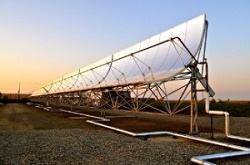
When you hear about desalination, it’s usually about a large-scale effort to transform seawater to freshwater through the process of reverse osmosis. In other words, an industrial plant is built in a terribly dry place at considerable expense, and salt water is pumped in and forced through membranes to create much-less-salty water (to oversimplify). But there is another, completely different process that separates salt and other things from water using a “solar still.”

Solar desalination technology isn’t new, but a company called WaterFX* is trying to put it to a new use in water-challenged California, and, potentially, everywhere, according to an interesting article in Forbes (link below). The company’s effort is about selling its scalable Aqua 4 system to growers and water districts, who can use it to recapture, purify and reuse agricultural run-off (that is, the copious amount of water used for irrigation that picks up salts, fertilizer and other impurities that make it problematic to reuse without damaging crop yields). The company’s small-scale pilot project with California’s  Panoche Water District was able to produce nearly 500 gallons of clean water per hour, and the district plans to launch a larger project with the company, according to the article below.

Read more about how the sytem works in Peter Kelly-Detwiler’s* piece for Forbes.

Read more about WaterFX* at its website.

(*Note: Peter Kelly-Detwiler is a partner at NorthBridge Energy Partners, LLC. This post is not an endorsement of that organization or of WaterFX.)

Leave a comment

Filed under Agriculture, Conservation, Desalination, Industry, North America, Technology, Water Resources, Water Shortage

Taxing Bottled Water to Link the Luxury to the Human Need

Image: LeeBrimelow

Image: LeeBrimelow

With the At the Waterline blog, I’m writing about water issues as I learn about them. Almost every day, I learn something new. It’s exciting, but it also makes me feel perpetually late to the party. Today I saw that people have been entering “Jorge Viñuales” into the blog’s search box, so I looked him up. That led me to a 13-month-old YouTube video entitled, “A Tax on Bottled Water: Jorge Viñuales at TEDx Zurich.”

In the video, Viñuales, a lawyer and law professor (see credentials below), suggests a small transactional tax on bottled water that would be used “(1) for the protection of the natural infrastructures that maintain the water cycle, i.e. wetlands, (2) for direct local water distribution and sanitation projects (e.g. for the coordination of inter-city projects), and (3) for research on water efficiency, decontamination and alternative techniques (e.g. exploitation of melting iced-water).”

Citing the $50 billion European bottled water market as an example, Viñuales says that a 3% tax could raise $1.5 billion (presumably annually). Viñuales acknowledges that some people think we all should stop drinking bottled water entirely, but he argues that “sermonizing” people is not the best way to effect environmental policy change. As such, he suggests what seems like a more practical step, in order “to link water as a luxury to a real problem … access to water as a human need.”

Whether bleeding bottled-water companies financially would work in practice, and do enough to fund programs to help those in immediate need as well as discover new or more efficient ways to get freshwater, are other questions — ones that a 12-minute TED talk can’t cover in any depth. Viñuales did mention, however, his work on a legal framework to manage freshwater resources trapped in ice (e.g., towing icebergs; extracting freshwater from icebergs is a serious subject of study).

Viñuales is a practicing lawyer, the Harold Samuel Professor of Law and Environmental Policy at the University of Cambridge, United Kingdom, and a Visiting Professor of International Law at The Graduate Institute, Geneva, Switzerland, during the academic year 2013-2014. Two of Viñuales’ most recent books are Foreign Investment and the Environment in International Law (Cambridge University Press, 2012) and Harnessing Foreign Investment to Promote Environmental Protection: Incentives and Safeguards (Cambridge University Press, 2013, co-edited with P.-M. Dupuy),

Leave a comment

Filed under Bottled Water, Events, Industry, Law, Oceans, Water Resources, Water Shortage

Drilling Down on Fracking: Latest News Plus Background

Image: insurancequotes.org

Image: insurancequotes.org

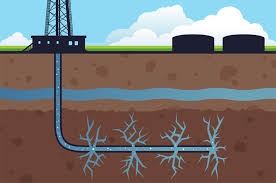
Not to be too Mr. Moto* about it, but it’s no exaggeration to say that the expansion of fracking, aka hydraulic fracturing, has been extremely controversial. The relatively new drilling practice, developed about 60 years ago but widely employed only within the past decade or so, involves pumping hundreds of thousands of gallons of water, sand and chemicals into the ground at each drill site to break up shale and release natural gas that had previously been inaccessible. It’s the subject of much protest over groundwater contamination and other potential ill effects. The fracking industry says the practice is safe and praises it for reducing oil imports, while environmental activists loudly warn of eco-catastrophe-for-profit and a disastrous delay in the quest for renewable energy sources amid worsening global warming.

Perhaps you’ve seen actor Mark Ruffalo at the anti-fracking forefront (here’s his CNN opinion piece with Greenpeace exec Phil Radford, from April 2013). And then there’s the feature film “Promised Land,” written by stars Matt Damon and John Krasinski and directed by Gus Van Sant. Previously, Josh Fox’s HBO documentaries about the largely unregulated industry, “GasLand” and “GasLand 2,” saw some acclaim. The fracking industry responded in kind, underwriting the film “TruthLand,” a pro-industry rebuttal to Fox. The likes of Popular Mechanics Scientific American and Discover have tried to clarify points of contention.

Meanwhile, a new study finds that more than half of Americans still know nearly nothing about fracking (below). I, for one, still have a lot to learn. It strikes me as an under-policed industry racing for purchase and profit ahead of federal, state and local regulation that should, eventually, mitigate fear and damage done — hopefully sooner than later (again, Mr. Moto speaks). But some say it’s already too late for regulation, and only bans will be effective.

Recent fracking news:

Fracking contamination found in water wells in 4 states – The Associated Press

In at least four U.S. states that have nurtured the nation’s energy boom, hundreds of complaints have been made about well-water contamination from oil or gas drilling, and pollution was confirmed in a number of them, according to a review of complaints in Pennsylvania, Ohio, West Virginia and Texas that casts doubt on industry suggestions that such problems rarely happen. The lack of detail in some state reports could help fuel public confusion and mistrust.

U.S. EPA unlikely to step up fracking enforcement efforts for now, say analysts – Reuters

Federal regulators are unlikely to step up enforcement of potential water contamination cases linked to natural gas drilling — despite new concerns about water safety — given a lack of political will and limited resources to pursue such cases, analysts said.

Study shows fracking is bad for babies – Bloomberg

Researchers from Princeton University, Columbia University and the Massachusetts Institute for Technology looked at Pennsylvania birth records from 2004 to 2011 to assess the health of infants born within a 2.5-kilometer radius of natural-gas fracking sites. They found that proximity to fracking increased the likelihood of low birth weight by more than half, from about 5.6% to more than 9%. The chances of a low Apgar score, a summary measure of the health of newborn children, roughly doubled, to more than 5%.

Study finds few know what fracking really is – Caspar Star-Tribune (Wyoming, U.S.)

A survey published by researchers at Oregon State, George Mason and Yale universities found that more than half of respondents reported knowing little or nothing of fracking. And almost 60% said they had no opinion on the subject.

Colorado communities could ban fracking under new proposed amendment – The Huffington Post

A proposed amendment to Colorado’s constitution that would give municipalities the power to ban or restrict fracking and other industrial activities would be the first of its kind nationwide if it passes.

(*Moto = Master of the Obvious)

Leave a comment

Filed under Environment, Fracking, Groundwater, Industry, North America, Pollution, Research, Technology

Chile May Make Miners Use Desalinated Water

Chuquicamata_copper_mine_chile (1)

Chuquicamata copper mine, by Owen Cliffe

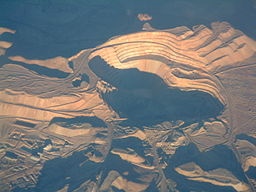
With communities in Chile’s Atacama Desert — one of the world’s driest — competing with copper mines for dwindling water supplies, some of the country’s lawmakers have submitted a bill that would force mining companies to use desalinated Pacific Ocean water, according to reports in Bloomberg and Mining.com.

A statement from Chile’s Chamber of Deputies, the lower house of the National Congress, calls for mining companies that use 150 liters (40 gallons) of water per second to begin using desalinated water in order to preserve freshwater for other uses.  Some mining companies already use desalinated water, others don’t. There is no word yet on when the upper house, the Senate, will address the legislation.

One third of the world’s copper supplies comes from Chile, and one third of the Chilean government’s revenue comes from copper exports — making mining one of the country’s most important industries as well as one of its biggest users of water. According to a report in BNamericas, the industry’s need for water is expected to increase by 38 % by 2021.

Leave a comment

Filed under Desalination, Industry, Law, Oceans, South America, Water Shortage