Category Archives: Environment

EC Awards 50 Million Euros to 11 Innovative Water Projects

Image: European Commission

Image: European Commission

In Brussels on Thursday, the European Commission unveiled 11 projects slated to receive €50 million to support their innovative responses to “water-related challenges” (to put a lot of different fish in one tank, so to speak).

The projects involve 179 partners representing research organizations and private companies across 19 European countries. There’s a lot of variety in the types of work, as well. Three examples: smarter management of water distribution networks; biotech treatment of heavy metal pollution in wastewater; and new “aquaponic” systems combining aquaculture and hydroponics in agricultural production.  You can see the project names and acronyms listed in the tags accompanying this post, and more description of each project can be found here.

The funds come from the 2013 “Environment call” for projects of the European Union’s s Seventh Framework Programme for Research and Technological Development (FP7). This brings total FP7 funding for water-related projects, 2007 – 2013, to more than €1 billion. A new funding initiative rolled out this month, the Horizon 2020 program, is expected to bring another €165 million to water projects in its first round of calls.

Read more:

UPDATE: Event presentations now uploaded

European Commission press release

A summary of each of the 11 projects

European Union water policy overview

Leave a comment

Filed under Agriculture, Awards and Honors, Conservation, Environment, Europe, Events, Industry, Pollution, Research, Sustainability, Technology, Wastewater Treatment, Water Resources, Water Shortage

The News From Davos: Big Business Now ‘Cares’ About Climate Change

Image: Fabrice Coffrini/AFP/Getty

Image: Fabrice Coffrini/AFP/Getty

A chill runs through me whenever I hear a sample of the gaffe from Mitt Romney’s 2011 presidential campaign speech in Iowa: “Corporations are people, my friend.” He was responding to a heckler. What he said was accurate in the eyes of the law in the United States; a corporation has the legal status and rights of a person. But it’s not hard to imagine that Romney was cheerfully referring to psychopathic friends who would blithely step over your body to reach profit.

Corporations as psychopaths is not a new idea, of course. The 2003  Canadian documentary film “The Corporation” makes the case, in a clinical sense, that if corporations are people, they’re psychos. Put simply, they lack empathy for others. They focus on profit alone. The free market rewards such self-interested ruthlessness.

Judging by news from the World Economic Forum in Davos, Switzerland, public opinion and, more importantly, harsh economic reality, are pushing the corporate world to see that self-preservation now actually requires reactions to climate change. Many of today’s meetings of politicians, business leaders and reps from aid organizations in Davos, and a record number for the event overall, are about climate change and sustainable business practices. That’s a lot of talk from some influential people, and now that it’s about money as much as it is about doing good (or appearing to do so), maybe it will make a difference.

And, of course, as the mainstream media has well-recorded, the actor Matt Damon received an award in Davos for his work as co-founder, with Gary White, of Water.org, which works on access to freshwater for the world’s 800+ million who lack it. Damon is one of four recipients of the WEF’s Crystal Award, for artists who have contributed to a better world. The others are Peruvian opera star Juan Diego Flórez, American violinist and conductor Lorin Maazel, and the Iranian-born artist Shirin Neshat.

Read more:

Industry awakens to the threat of climate change – The New York Times

Davos 2014: live and archived blog coverageGuardian Sustainable Business

2014 World Economic Forum: live updates from Davos – The Huffington Post

World Economic Forum 2014 Meeting – WEF

Leave a comment

Filed under Awards and Honors, Climate Change, Conservation, Environment, Europe, Events, Industry, NGOs, Sustainability, Water Resources, Water Shortage

Calif. State of the State Address: Brown’s Drought Plan in Broad Strokes

Calif. Gov. Brown delivers 2014 State of the State Address. Photo Credit: Justin Short, Office of the Governor.

Calif. Gov. Brown delivers 2014 State of the State Address. Photo Credit: Justin Short, Office of the Governor.

Yesterday, the same day I wrote about California’s dire 3-year drought, California Gov. Edmund G. Brown Jr. laid out the state’s plan regarding the water shortage in his annual State of the State address to the California legislature. It’s not the governor’s job to provide exhaustive detail here, and he doesn’t. The drought got about 15 of the speech’s 130 lines.

Here’s the part of the address about the drought:

Among all our uncertainties, weather is one of the most basic. We can’t control it. We can only live with it, and now we have to live with a very serious drought of uncertain duration. 

Right now, it is imperative that we do everything possible to mitigate the effects of the drought. I have convened an Interagency Drought Task Force and declared a State of Emergency. We need everyone in every part of the state to conserve water. We need regulators to rebalance water rules and enable voluntary transfers of water and we must prepare for forest fires. As the State Water Action Plan lays out, water recycling, expanded storage and serious groundwater management must all be part of the mix. So too must be investments in safe drinking water, particularly in disadvantaged communities. We also need wetlands and watershed restoration and further progress on the Bay Delta Conservation Plan.

It is a tall order.

But it is what we must do to get through this drought and prepare for the next.

We do not know how much our current problem derives from the build-up of heat-trapping gasses, but we can take this drought as a stark warning of things to come. The United Nations Panel on Climate Change says – with 95 percent confidence – that human beings are changing our climate. This means more droughts and more extreme weather events, and, in California, more forest fires and less snow pack.

UPDATE: California drought prompts first-ever “zero water allocation” – Los Angeles Times

Related Posts:

Civilization Lost? California’s 500-Year Drought Potential (Jan. 22, 2014)

Leave a comment

Filed under Climate Change, Conservation, Drought, Environment, Events, North America, Water Resources, Water Shortage

Top 5 Non-Lethal Uses for Drones

Image: Flying Eye

Image: Flying Eye

Happiness is not a police state, and unmanned aerial vehicles aren’t just for the war machine anymore. Though many of us associate drones with bomb strikes and government surveillance, their civilian use is growing more widespread and attracting massive investment. It’s going to go far beyond recent headline grabbers (e.g., Domino’s pizza-delivery tests and Amazon.com CEO Jeff Bezos saying on “60 Minutes” that deliveries by drone will be off the ground in 2015, depending on FAA approval). Essentially, anything that calls for a bird’s-eye view, aerial photgraphy, or lightweight deliveries can benefit from drone service. In no particular order, here are five favorites, already underway:

Monitoring and protecting wildlife.  Some early indicators suggest drones are better at spotting wildlife than people in planes and helicopters are, while also reducing costs and risks to human life. Researchers have found success deploying drones to survey dugongs, a vegetarian marine mammal related to the manatee, in Shark Bay, on the western Australia coast. The U.S. Geological Survey uses drones to count sandhill crane populations. The devices are also used to track endangered Sumatran orangutans.

Delivering medicine. The Bill and Melinda Gates Foundation has awarded a $100,000 grant to George Barbastathis and collaborators at the Harvard-MIT Division of Health Sciences and Technology in the U.S. They’re working on unmanned aerial vehicles that health care workers can deploy via cell phones to swiftly deliver vaccines and the like.

3-D mapping for everyone. Using a lightweight drone and powerful new software, almost anyone will soon be able to create precise 3-D maps for any number of uses, such as crop management, facilities monitoring and disaster relief operations.  Watch Pix4D co-founder Olivier Kung’s TEDx talk on the subject.

Search-and-rescue. The Royal Canadian Mounted Police reported what they believed to be the first use of a drone to rescue an accident victim. After a late-night car accident in remote Saskatchewan in May 2013, an injured and disoriented man called police but couldn’t report his location. Worse, he wandered far from the crash site.  A helicopter search failed to find the man, even with night-vision gear, but an unmanned drone with an infrared camera did the job. Without it, he would not have survived the night.

Hurricane tracking. Improvements in drone technology have increased the aircraft’s range and flying time, making them invaluable for gathering weather data. An airplane can’t safely stay inside a hurricane for 30 hours, as some drones can.  NASA and Northrop Grumman have teamed up on a $30 million project to monitor storms as they evolve. A University of Florida project is looking at doing similar work with swarms of tiny drones.

Leave a comment

Filed under Agriculture, Conservation, Environment, Industry, Natural Disasters, North America, Oceans, Research, Technology

WFES News: WorldBank Launches Initiative at Water and Energy Summits in Abu Dhabi

Image: World Bank Water

Image: World Bank Water

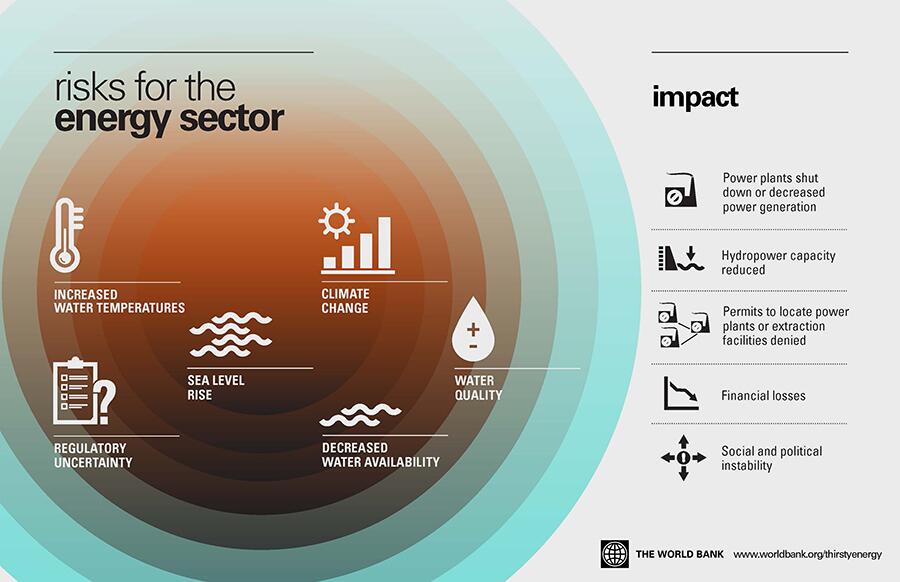
The World Bank has announced the launch of its “Thirsty Energy” initiative, aimed at helping governments tackle growing water-energy challenges, at the 7th annual World Future Energy Summit (WFES) and the 2nd annual International Water Summit (IWS). The two meetings are running concurrently, Jan. 20 – Jan. 22, at the Abu Dhabi National Exhibition Centre in the United Arab Emirates.

It takes a lot of water to generate power through various processes, and it takes a lot of power to extract, treat and deliver water. Yet, according to the World Bank, energy planning and development decisions are often made without regard to current and future water shortages. Its plan is to offer proactive, cross-sector advice on energy and water resource management planning, tailored according to a given country’s resources, modeling experience, and political and institutional realities.

Why go to all that trouble? Because near-future projections paint a disturbing picture. Today more than 780 million people don’t have enough access to potable drinking water, and about 1.3 billion lack electricity, according to estimates. In a world with a fixed and finite amount of freshwater but a surging population, global energy consumption is expected to swell 50% by 2035, while the energy sector’s use of water may increase by 85%. That means worsening water shortages, and, as noted in a previous post, climate change will make the situation even more dire in certain areas.

UPDATE: Thirsty energy: the conflict between demands for water and energyThe Guardian

More from WFES and IWS:

World Bank launches “Thirsty Energy” initiative – The World Bank / WFES

Will water contrain our energy future? (Thirsty Energy initiative, with extensive info graphics) – The World Bank

Four ways water shortages are harming energy production – The Water Blog (blogs.worldbank.org)

Denmark and Abu Dhabi sign clean-energy deal – The National

Related posts:

On tap Monday: Annual UN Water conference in Spain (Jan. 12, 2014)

Study: Freshwater shortage will double climate change’s impact on agriculture (Dec. 17, 2013)

Leave a comment

Filed under Climate Change, Conservation, Desalination, Environment, Events, Industry, Middle East, Research, Sustainability, Technology, Water Resources, Water Shortage

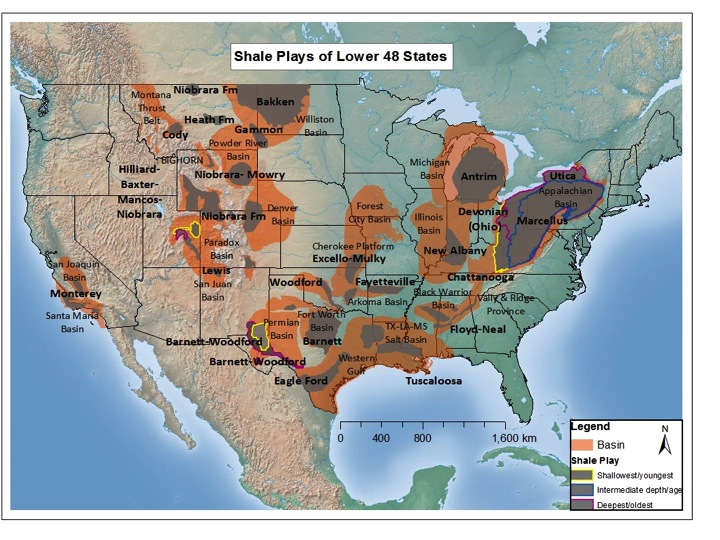
U.S. Shale Map: Could Be a Lot of Fracking Drilling in the Lower 48

Image: Duke University

Image: Duke University

See the website for the Duke University study on shale gas and fracking, Avner Vengosh research group, Duke Nicholas School of the Environment.

OTHER RELATED LINKS AND POSTS:

Duke study suggests cutting fracking waste’s radioactivity with acid drainage from mines – The Associated Press (Jan. 13, 2014)

Duke fracking tests reveal dangers driller’s study missed in Texas – Bloomberg (Jan.  10, 2014)

Drilling Down on Fracking: Latest News Plus Background (Jan. 6, 2014)

Fracking Across the Pond: In the UK (Jan 8, 2014)

Leave a comment

January 14, 2014 · 10:26 am

Fracking Debate: How Once-Cooperative Attitudes Died

Many U.S. states with stalled fracking legislation — and probably some countries — are watching as comprehensive regulatory plans for hydraulic fracturing unfold in Illinois and California. A year ago, Illinois state legislators, industry officials and environmentalists appeared to be getting along as the state’s first regulations for the natural gas drilling process were passed, but good relations have since dissolved in mistrust. In California, after some relative harmony early on, environmental groups are trying to put the brakes on pending legislation in favor of further study. Any surprises here, as lawmakers struggle with “comprehensive” regs that try to please everyone? Not so much. Associated Press business writer Tammy Webber does a nice job of describing the situations.

RELATED NEWS: Duke fracking tests reveal dangers driller’s study missed in Texas – Bloomberg

See previous posts:

Drilling Down on Fracking: Latest News Plus Background (Jan. 6, 2014)

Fracking Across the Pond: In the UK (Jan 8, 2014)

Leave a comment

Filed under Environment, Fracking, Groundwater, Industry, North America, Pollution, Technology

On Tap Monday: Annual UN Water Conference in Spain

Image: UN Water

Image: UN Water

UN Water’s annual conference in Zaragoza, Spain, runs Monday, Jan. 13 through Thursday, Jan 16. This edition plumbs the depths of the relationship of water and energy as a run-up to World Water Day. The small city of Zaragoza is roughly midway between Madrid and Barcelona. I can’t make it to there myself, but I will be on the lookout for interesting news trickling out of the meetings.

As with a lot of UN endeavors, the full name and description of the event are a mouthful (and you can read much, much more fairly dry stuff at the website): 2014 UN-Water Annual International Zaragoza Conference. Preparing for World Water Day 2014: Partnerships for improving water and energy access, efficiency and sustainability.

Or, because it’s easier to navigate and gives a sense of the topics, you can just read the agenda.

World Water Day is March 22. Of course it has its own website, too.  The main “celebrations” — which include the release of a report and the bestowing of an award — will take place in Japan.

Leave a comment

Filed under Conservation, Environment, Europe, Events, Human rights, Industry, Research, Sustainability, Technology, United Nations, Wastewater Treatment, Water Resources, Water Shortage

UPDATED: Dangers of Leaked Chemical in West Virginia Remain a Disturbing Mystery

chemicals

About 300,000 residents of eight counties in West Virginia were told on Thursday not to drink, cook or wash with tap water (but they can still flush it down the toilet or put out a fire with it, officials added — what a relief). About 7,500 gallons of an industrial solvent used to clean coal had seeped from a ruptured holding tank into the Elk River. As of Monday morning, water tests had showed improvement, but the ban is still in place.

One of the most disturbing facts about the story is that the risks to health posed by the chemical, 4-methylcyclohexane methanol, or MCHM, are poorly understood. Science writer Deborah Blum reports for Wired.com on her frustrating search for information. David Biello sheds some light on the basic properties of the compound, which is a type of alcohol, in Scientific American.

The stories, and the comments attached, raise other important questions, directly or indirectly. How long had the tank been leaking, and how does such a failure go undetected, even for a day? (There are supposed to be alarms and other safety protocols.) How much of the chemical have residents already ingested, and what health issues could result? How culpable are the tank’s owner, Charleston-W. Va.-based Freedom Industries, and the state of West Virginia? The state gets a lot of grief for under-regulating the powerful coal industry.  (And further, in what world does it seem OK to have such chemical tanks just upriver from a water system’s intake pipes? What can the EPA do? Can “Freedom Industries” be cited for its name alone? One can only hope).

Blum also brings up the 35-year-old Toxic Substances Control Act, saying it hasn’t been updated and strengthened in all that time. Why? And, of course, what will change as a result of this spill? Unfortunately, it often takes a nightmare to wake people up to the need for action.

Read more:

UPDATE: Chemical spill muddies picture in a state wary of regulationsThe New York Times

UPDATE: Critics say spill highlights lax West Virginia regulationsThe New York Times

OP-ED: A predictable water crisis due in part to “audacious influence of industry” – Sunday Gazette-Mail

UPDATE: Hope flows as W. Va. water  showing signs of improvement after spill – NBCNews.com

The wait continues for safe tap water in West VirginiaThe New York Times

Freedom Industries cited for Elk chemical spillSaturday Gazette-Mail

Chemical guesswork in West Virginia – Wired.com

How dangerous is the coal-washing chemical spilled in West Virginia?Scientific American

Thousands of residents warned not to use water – wvgazette.com

2 Comments

Filed under Environment, North America, Pollution, Rivers and Watersheds

Drilling Down on Fracking: Latest News Plus Background

Image: insurancequotes.org

Image: insurancequotes.org

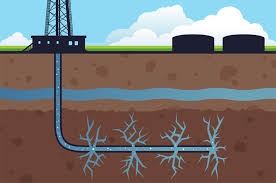
Not to be too Mr. Moto* about it, but it’s no exaggeration to say that the expansion of fracking, aka hydraulic fracturing, has been extremely controversial. The relatively new drilling practice, developed about 60 years ago but widely employed only within the past decade or so, involves pumping hundreds of thousands of gallons of water, sand and chemicals into the ground at each drill site to break up shale and release natural gas that had previously been inaccessible. It’s the subject of much protest over groundwater contamination and other potential ill effects. The fracking industry says the practice is safe and praises it for reducing oil imports, while environmental activists loudly warn of eco-catastrophe-for-profit and a disastrous delay in the quest for renewable energy sources amid worsening global warming.

Perhaps you’ve seen actor Mark Ruffalo at the anti-fracking forefront (here’s his CNN opinion piece with Greenpeace exec Phil Radford, from April 2013). And then there’s the feature film “Promised Land,” written by stars Matt Damon and John Krasinski and directed by Gus Van Sant. Previously, Josh Fox’s HBO documentaries about the largely unregulated industry, “GasLand” and “GasLand 2,” saw some acclaim. The fracking industry responded in kind, underwriting the film “TruthLand,” a pro-industry rebuttal to Fox. The likes of Popular Mechanics Scientific American and Discover have tried to clarify points of contention.

Meanwhile, a new study finds that more than half of Americans still know nearly nothing about fracking (below). I, for one, still have a lot to learn. It strikes me as an under-policed industry racing for purchase and profit ahead of federal, state and local regulation that should, eventually, mitigate fear and damage done — hopefully sooner than later (again, Mr. Moto speaks). But some say it’s already too late for regulation, and only bans will be effective.

Recent fracking news:

Fracking contamination found in water wells in 4 states – The Associated Press

In at least four U.S. states that have nurtured the nation’s energy boom, hundreds of complaints have been made about well-water contamination from oil or gas drilling, and pollution was confirmed in a number of them, according to a review of complaints in Pennsylvania, Ohio, West Virginia and Texas that casts doubt on industry suggestions that such problems rarely happen. The lack of detail in some state reports could help fuel public confusion and mistrust.

U.S. EPA unlikely to step up fracking enforcement efforts for now, say analysts – Reuters

Federal regulators are unlikely to step up enforcement of potential water contamination cases linked to natural gas drilling — despite new concerns about water safety — given a lack of political will and limited resources to pursue such cases, analysts said.

Study shows fracking is bad for babies – Bloomberg

Researchers from Princeton University, Columbia University and the Massachusetts Institute for Technology looked at Pennsylvania birth records from 2004 to 2011 to assess the health of infants born within a 2.5-kilometer radius of natural-gas fracking sites. They found that proximity to fracking increased the likelihood of low birth weight by more than half, from about 5.6% to more than 9%. The chances of a low Apgar score, a summary measure of the health of newborn children, roughly doubled, to more than 5%.

Study finds few know what fracking really is – Caspar Star-Tribune (Wyoming, U.S.)

A survey published by researchers at Oregon State, George Mason and Yale universities found that more than half of respondents reported knowing little or nothing of fracking. And almost 60% said they had no opinion on the subject.

Colorado communities could ban fracking under new proposed amendment – The Huffington Post

A proposed amendment to Colorado’s constitution that would give municipalities the power to ban or restrict fracking and other industrial activities would be the first of its kind nationwide if it passes.

(*Moto = Master of the Obvious)

Leave a comment

Filed under Environment, Fracking, Groundwater, Industry, North America, Pollution, Research, Technology