Category Archives: Technology

To the Rescue in California? Solar-Powered Desalination

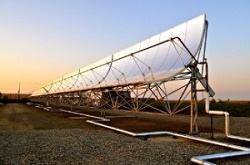
solar desal water fx

Image: WaterFX

When you hear about desalination, it’s usually about a large-scale effort to transform seawater to freshwater through the process of reverse osmosis. In other words, an industrial plant is built in a terribly dry place at considerable expense, and salt water is pumped in and forced through membranes to create much-less-salty water (to oversimplify). But there is another, completely different process that separates salt and other things from water using a “solar still.”

Solar desalination technology isn’t new, but a company called WaterFX* is trying to put it to a new use in water-challenged California, and, potentially, everywhere, according to an interesting article in Forbes (link below). The company’s effort is about selling its scalable Aqua 4 system to growers and water districts, who can use it to recapture, purify and reuse agricultural run-off (that is, the copious amount of water used for irrigation that picks up salts, fertilizer and other impurities that make it problematic to reuse without damaging crop yields). The company’s small-scale pilot project with California’s  Panoche Water District was able to produce nearly 500 gallons of clean water per hour, and the district plans to launch a larger project with the company, according to the article below.

Read more about how the sytem works in Peter Kelly-Detwiler’s* piece for Forbes.

Read more about WaterFX* at its website.

(*Note: Peter Kelly-Detwiler is a partner at NorthBridge Energy Partners, LLC. This post is not an endorsement of that organization or of WaterFX.)

Leave a comment

Filed under Agriculture, Conservation, Desalination, Industry, North America, Technology, Water Resources, Water Shortage

Drilling Down on Fracking: Latest News Plus Background

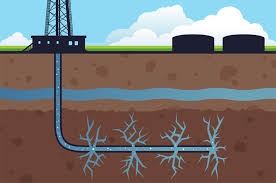
Image: insurancequotes.org

Image: insurancequotes.org

Not to be too Mr. Moto* about it, but it’s no exaggeration to say that the expansion of fracking, aka hydraulic fracturing, has been extremely controversial. The relatively new drilling practice, developed about 60 years ago but widely employed only within the past decade or so, involves pumping hundreds of thousands of gallons of water, sand and chemicals into the ground at each drill site to break up shale and release natural gas that had previously been inaccessible. It’s the subject of much protest over groundwater contamination and other potential ill effects. The fracking industry says the practice is safe and praises it for reducing oil imports, while environmental activists loudly warn of eco-catastrophe-for-profit and a disastrous delay in the quest for renewable energy sources amid worsening global warming.

Perhaps you’ve seen actor Mark Ruffalo at the anti-fracking forefront (here’s his CNN opinion piece with Greenpeace exec Phil Radford, from April 2013). And then there’s the feature film “Promised Land,” written by stars Matt Damon and John Krasinski and directed by Gus Van Sant. Previously, Josh Fox’s HBO documentaries about the largely unregulated industry, “GasLand” and “GasLand 2,” saw some acclaim. The fracking industry responded in kind, underwriting the film “TruthLand,” a pro-industry rebuttal to Fox. The likes of Popular Mechanics Scientific American and Discover have tried to clarify points of contention.

Meanwhile, a new study finds that more than half of Americans still know nearly nothing about fracking (below). I, for one, still have a lot to learn. It strikes me as an under-policed industry racing for purchase and profit ahead of federal, state and local regulation that should, eventually, mitigate fear and damage done — hopefully sooner than later (again, Mr. Moto speaks). But some say it’s already too late for regulation, and only bans will be effective.

Recent fracking news:

Fracking contamination found in water wells in 4 states – The Associated Press

In at least four U.S. states that have nurtured the nation’s energy boom, hundreds of complaints have been made about well-water contamination from oil or gas drilling, and pollution was confirmed in a number of them, according to a review of complaints in Pennsylvania, Ohio, West Virginia and Texas that casts doubt on industry suggestions that such problems rarely happen. The lack of detail in some state reports could help fuel public confusion and mistrust.

U.S. EPA unlikely to step up fracking enforcement efforts for now, say analysts – Reuters

Federal regulators are unlikely to step up enforcement of potential water contamination cases linked to natural gas drilling — despite new concerns about water safety — given a lack of political will and limited resources to pursue such cases, analysts said.

Study shows fracking is bad for babies – Bloomberg

Researchers from Princeton University, Columbia University and the Massachusetts Institute for Technology looked at Pennsylvania birth records from 2004 to 2011 to assess the health of infants born within a 2.5-kilometer radius of natural-gas fracking sites. They found that proximity to fracking increased the likelihood of low birth weight by more than half, from about 5.6% to more than 9%. The chances of a low Apgar score, a summary measure of the health of newborn children, roughly doubled, to more than 5%.

Study finds few know what fracking really is – Caspar Star-Tribune (Wyoming, U.S.)

A survey published by researchers at Oregon State, George Mason and Yale universities found that more than half of respondents reported knowing little or nothing of fracking. And almost 60% said they had no opinion on the subject.

Colorado communities could ban fracking under new proposed amendment – The Huffington Post

A proposed amendment to Colorado’s constitution that would give municipalities the power to ban or restrict fracking and other industrial activities would be the first of its kind nationwide if it passes.

(*Moto = Master of the Obvious)
Leave a comment

Filed under Environment, Fracking, Groundwater, Industry, North America, Pollution, Research, Technology

And the International Desalination Association Award Goes to …

Image: IDA

Image: IDA

OK, it may not be as glamorous or as self-important as the Academy Awards, aka The Oscars, but the International Desalination Association (IDA) exists and it gives out awards. That’s two new things I learned today.

IDA is a non-profit international NGO* that strives to educate people about desalination and water reuse. Its 2013 Channabasappa Memorial Scholarship has been awarded to Leila Karimi, a Ph.D. candidate at the Institute for Energy and the Environment, Chemical Engineering Department, New Mexico State University. Her focus, according to the award announcement, is on “the selective removal of ions in an electrodialysis reversal process as one of the inland desalination technologies that is appropriate for brackish groundwater.” Good for her, especially because Australian researchers recently concluded  that there’s a whole lot more brackish, or somewhat salty, groundwater in the world than previously thought.

*(NGO, or non-governmental organization; the abbreviation is used more commonly than the spelled-out version in the development world, e.g., the world of the United Nations and various other regional and international aid organizations.)

Leave a comment

Filed under Awards and Honors, Desalination, Groundwater, NGOs, Oceans, Technology, Water Resources

Study Describes Vast Reserves of Water Under Ocean Floors

cropped-p1000842-4.jpg

Image: David Snow

On the very day I was beginning to put together this blog, Dec. 5, the journal Nature published a new study by a group of Australian researchers that may seem to negate any need for another blog about the looming global water crisis.

The study, Offshore fresh groundwater reserves as a global phenomenon, finds that fresh and brackish water deposits under oceans are much more common, and much more vast, than previously thought.  The research team estimates that the reserves amount to 120,000 cubic miles of water.

“The volume of this water resource is a hundred times greater than the amount we’ve extracted from the Earth’s sub-surface in the past century since 1900,” the study’s lead author, Dr. Vincent Post, said in a statement. He and his team are at of the National Centre for Groundwater Research and Training and the School of the Environment at Flinders University in Adelaide, Australia.

Post explained that the oceans are at much higher surface levels today than they were 20,000 years ago, when polar ice caps began to melt, adding water volume over time. What was once ground has aquifers filled with groundwater underneath. These aquifers, though underneath large bodies of salt water, are otherwise similar to the ones under dry land that are being depleted all over the world.

So, if there’s so much more water out there than we thought, why should I continue to study it as a precious and finite resource that could cause more global conflict than oil in the coming decades? Because of what lies between these massive reserves of water and their ability to sustain people and communities: complex infrastructure and high costs. As Post and his team point out, the water will have to be pumped from ocean platforms or facilities on nearby dry land. That, plus the need for desalination, make getting the water where it’s needed, in a drinkable state, a tall order. On the plus side, as the study indicates, the water is not as salty as seawater, so the desalination is that much less energy-intensive.

After all is said and done, however, this massive “new” resource is still finite. As Post noted, aquifers under oceans won’t be refilled with new groundwater until the oceans recede again, “which is not likely to happen for a very long time.” (Possibly a bit of understatement, that.)

Read more about the study and its implications.

UPDATE: Offshore fresh water aquifers: Which law will apply? – International Water Law Project Blog

Leave a comment

Filed under Desalination, Groundwater, Oceans, Research, Technology, Water Shortage