Category Archives: Rivers and Watersheds

Past, Present and Future: California’s Epic Struggle With Water

Image courtesy of Ca.gov

Image courtesy of Ca.gov

Alexis C. Madrigal’s new piece in The Atlantic, which he tweeted is his most ambitious yet, is a good read. It has great descriptions of California’s ongoing, larger-than-life efforts to stay hydrated in a place where nature simply won’t cooperate. The article centers on Gov. Jerry Brown’s $25 billion Bay Delta Conservation Plan, which proposes to dig two tunnels under the entire Sacramento-San Joaquin Delta. If built, they’ll be longer than the Chunnel connecting England and France under the English Channel.

Read more:

American Aqueduct: The Great California Water Saga
A $25 billion plan, a small town, and a half-century of wrangling over the most important resource in the biggest state
Alexis C. Madrigal, The Atlantic

Recent related posts:

Serious Water Conservation Requires Layered Approach and Emotional Commitment

California’s State-of-the-State Address: Brown’s Drought Plan in Broad Strokes

Civilization Lost? California’s 500-Year Drought Potential

To the Rescue in California? Solar-Powered Desalination

Leave a comment

Filed under Agriculture, Conflicts, Conservation, Dams and Hydropower, Drought, Environment, Groundwater, Industry, North America, Rivers and Watersheds, Technology, Water Shortage

Restoring Rivers: American Rivers Announces 51 Dam Removals in 2013, Builds New Interactive Map

dam removal

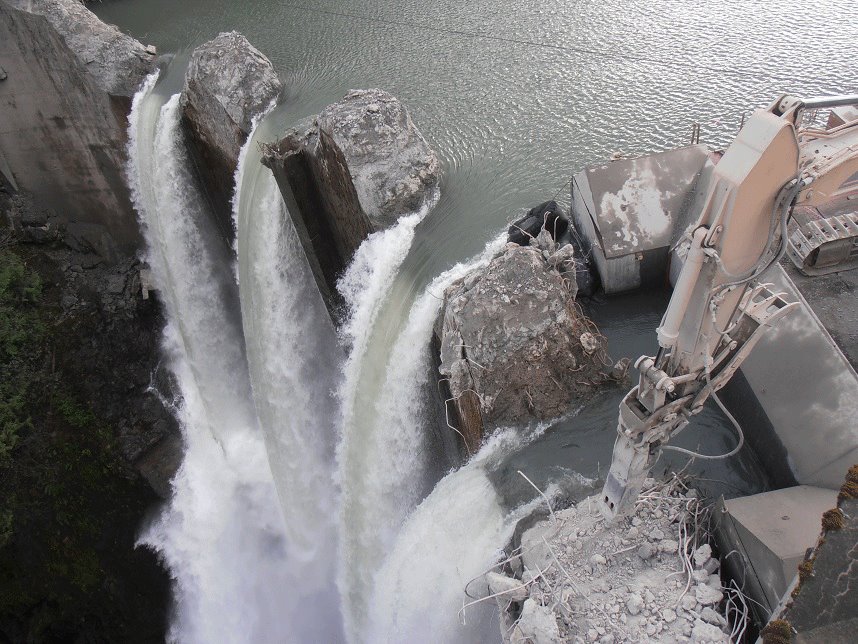
On Wednesday the nonprofit group American Rivers announced its list of outdated or unsafe U.S. dams removed in 2013 to restore rivers, tallying 51 projects undertaken by communities in 18 states working with nonprofit groups and state and federal agencies.

American Rivers says it had a hand in 25 of the 2013 dam removals, but tracks all removals, and is the only organization to do so. According to the group, the top states for dam removal last year were Pennsylvania (12), Oregon (eight), New Jersey (four), and, with three apiece, Maine, Massachusetts, North Carolina and Vermont.  About 1,150 dams have been removed since 1912, with most of those deconstructions occurring in the past 20 years.

Why remove dams? There are tens of thousands of them in the U.S., and quite a few are old, unsafe or no longer serve their intended purpose. As former U.S. Secretary of the Interior Bruce Babbitt once said, “on average, we have constructed one dam every day since the signing of the Declaration of Independence.” Removing them, especially those that no longer do enough for us (e.g., generating adequate amounts of reasonably clean hydropower), can restore river health, clean water, and fish and wildlife, and improve public safety and recreation. See a more complete list of reasons here.

To accompany the 2013 list, American Rivers launched an interactive map that includes all known dam removals in the United States as far back as 1936. The map features the name of the dam and river, location, year the dam was removed, and a description.

“For the first time ever, we have an interactive map that shows every dam removal that has ever happened in the U.S.,” said Devin Dotson, American Rivers’ associate director of communications. “There aren’t many things that have such a big impact on a river as a dam. They block a river, they can hurt clean water, they can hurt fish, they can hurt wildlife. American Rivers has pioneered a science-based approach to the removal of outdated dams.”

Read more from AmericanRivers.org:

51 dams removed to restore rivers in 2013

New interactive map: all known U.S. dam removals since 1936

Why we remove dams

Making hydropower safe for rivers

Leave a comment

Filed under Conservation, Dams and Hydropower, Environment, NGOs, North America, Rivers and Watersheds, Technology, Water Resources

As Fracking Booms, Wastewater Concerns Grow

Image: insurancequotes.org

Image: insurancequotes.org

With hydraulic fracturing for oil and gas continuing to proliferate across the U.S., scientists and environmental activists are raising questions about whether millions of gallons of contaminated drilling fluids could be threatening water supplies and human health.

– Yale Environment 360

Leave a comment

Filed under Fracking, Groundwater, Industry, North America, Pollution, Research, Rivers and Watersheds, Wastewater Treatment, Water Resources

WaterLex Helps Put the Human Right to Water Into New Legal Frameworks

Image: WaterLex

Image courtesy of WaterLex

One of the benefits of living in Geneva, Switzerland, is that I have access to the United Nations and international organizations that work with it. WaterLex, for example, is an international NGO that partners with UN Water. It takes an interesting, forward-looking, “lawyerly” approach to working on issues related to freshwater scarcity. The group, with a staff of seven based here, helps water-governance stakeholders in various countries establish policies and standards that comply with the human right to water and sanitation (HRWS). To do its work, the staff consults with more than 100 international experts in water management, development and law.

Many water NGOs work on access to water, helping people in water-stressed communities survive by delivering clean water, digging wells, installing pumps, and so forth. WaterLex attacks the problem close to its root and in a way that helps enable water security for future generations: It trains lawmakers and others with influence over water resources in a community, or a country, on how to implement new legal frameworks in which the human right to water is central.

WaterLex Executive Director Jean-Benoit Charrin co-founded the organization in 2010, the same year the human right to water and sanitation became fully recognized. I spoke with him on Tuesday at the WaterLex offices down the street from the Palace of Nations (UN). The rest of the staff, a mix of lawyers and operations experts, were away on missions. Although I would have liked to meet them, I’m glad they were off doing their work.

“There are four things we never want to hear people say again,” Charrin said. “That they didn’t know there was a problem. That they know there is a problem, but they don’t know how to deal with it. That they know there is a problem and how to deal with it, but they don’t know how to get the money. And finally, that they know there is a problem but they don’t care.” He paralleled the four statements succinctly with four WaterLex work areas:  providing assistance with information, capacity-building, budgeting, and accountability. Learn more about the group’s work below.

WaterLex tools (naturally, these are also on the Water Resources page):

WaterLex Legal Database on the Human Right to Water and Sanitation

WaterLex Toolkit: Integrating the Human Right to Water and Sanitation in Development Practice

Examples of WaterLex activities:

  • Worked with 10 universities to develop its online Legal Database (link above), a reference tool for policy makers that enables them to harmonize their legal frameworks with HRWS.
  • Trained more than 40 members of the Pan African Parliament on the integration of national legal frameworks with HRWS.
  • Partnered with the UN Development Programme (UNDP) to advise the government of Niger on designing a decentralized cooperation strategy that complies with human rights obligations.
  • Drafted a resolution adopted by the African Commission on Human and People’s Rights clarifying legal responsibilities of states in the management of water as a result of human rights commitments.
  • Worked with the Swiss Agency for Development Cooperation (SDC) to develop a toolkit and field training for water program managers in Nicaragua, Moldova and Mozambique.
  • Assisted the UN Economic Commission for Europe (UNECE) in the design of an Equity Score Card to help governments assess their population’s relative access to safe and affordable drinking water.

Leave a comment

Filed under Africa, Conservation, Drought, Europe, Groundwater, Human rights, Law, NGOs, Pollution, Research, Rivers and Watersheds, South America, United Nations, Water Resources, Water Shortage

UPDATED: Dangers of Leaked Chemical in West Virginia Remain a Disturbing Mystery

chemicals

About 300,000 residents of eight counties in West Virginia were told on Thursday not to drink, cook or wash with tap water (but they can still flush it down the toilet or put out a fire with it, officials added — what a relief). About 7,500 gallons of an industrial solvent used to clean coal had seeped from a ruptured holding tank into the Elk River. As of Monday morning, water tests had showed improvement, but the ban is still in place.

One of the most disturbing facts about the story is that the risks to health posed by the chemical, 4-methylcyclohexane methanol, or MCHM, are poorly understood. Science writer Deborah Blum reports for Wired.com on her frustrating search for information. David Biello sheds some light on the basic properties of the compound, which is a type of alcohol, in Scientific American.

The stories, and the comments attached, raise other important questions, directly or indirectly. How long had the tank been leaking, and how does such a failure go undetected, even for a day? (There are supposed to be alarms and other safety protocols.) How much of the chemical have residents already ingested, and what health issues could result? How culpable are the tank’s owner, Charleston-W. Va.-based Freedom Industries, and the state of West Virginia? The state gets a lot of grief for under-regulating the powerful coal industry.  (And further, in what world does it seem OK to have such chemical tanks just upriver from a water system’s intake pipes? What can the EPA do? Can “Freedom Industries” be cited for its name alone? One can only hope).

Blum also brings up the 35-year-old Toxic Substances Control Act, saying it hasn’t been updated and strengthened in all that time. Why? And, of course, what will change as a result of this spill? Unfortunately, it often takes a nightmare to wake people up to the need for action.

Read more:

UPDATE: Chemical spill muddies picture in a state wary of regulationsThe New York Times

UPDATE: Critics say spill highlights lax West Virginia regulationsThe New York Times

OP-ED: A predictable water crisis due in part to “audacious influence of industry” – Sunday Gazette-Mail

UPDATE: Hope flows as W. Va. water  showing signs of improvement after spill – NBCNews.com

The wait continues for safe tap water in West VirginiaThe New York Times

Freedom Industries cited for Elk chemical spillSaturday Gazette-Mail

Chemical guesswork in West Virginia – Wired.com

How dangerous is the coal-washing chemical spilled in West Virginia?Scientific American

Thousands of residents warned not to use water – wvgazette.com

2 Comments

Filed under Environment, North America, Pollution, Rivers and Watersheds

Water War? Dam Talks Between Egypt and Ethiopia Falter

Nile_River_and_delta_from_orbit

Image: NASA

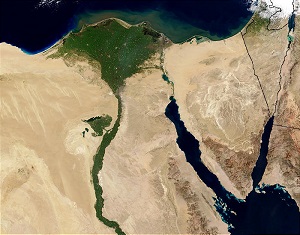
In 1979, Egyptian president Anwar Sadat said if the country ever again went to war, it would be over water. Egypt’s near-total reliance on the Nile River for water has made for tense relations with other Nile Basin countries at times, and Ethiopia’s current construction of the massive Grand Ethiopian Renaissance Dam on the Blue Nile tributary, upriver from Egypt, has led to speculation that war could erupt. Some experts say it probably won’t, because Ethiopia has a strong military and Egypt is no longer under the hawkish sway of Hosni Mubarak, but sabres have been rattled.

Read more:

Update: Egyptian PM says dam negotiations are ‘not over’ (Ahram Online)

Bloomberg reports on Ethiopia’s rejection of Egypt’s latest proposal asserting its right to most of the water.

Aljazeera provides background on this dispute, as well as previous clashes over the Nile.

Ahram Online quotes Egyptian official calling Ethiopian claims of dam progress a “media show.”

Leave a comment

Filed under Africa, Conflicts, Rivers and Watersheds, Water Shortage

Dec. 18, 2013: What’s in Your Water?

Water_pollution

Image: U.S. EPA

Today I’m posting a short roundup of international news about substances found in the water.

Hormone-disrupting chemicals found in water at fracking sites

A study of hydraulic fracturing sites in Colorado finds substances that have been linked to infertility, birth defects and cancer. (United States)

Ontario’s Grand River loaded with artificial sweeteners, study finds

It’s so chock full of artificial sweeteners that scientists say the chemicals can be used to track the movement of treated waste in the region’s municipal water supplies. (Canada)

Communication, cooperation key to water issues in Africa and Asia

Despite radically different cultures, climate, geography, and levels of government involvement in improving the lives of its citizens, Ethiopia, India, and China all face similar issues of water sanitation and hygiene. (Africa, Asia)

EPA drills wells to test groundwater contamination

As scientists home in on the source of contamination near Texas’ Donna Reservoir Superfund site, they drilled new wells this week to test the groundwater. (U.S.)

Pollution takes a toll on aquatic life in 150 river stretches

Discharge of untreated water in India has left 150 river stretches across the country too polluted to support any aquatic life. (India)

Judge approves $165 million settlements in Passaic River pollution case

A New Jersey judge has approved a pair of settlements worth $165.4 million to the state from nearly 300 companies, towns and public agencies accused of polluting the Passaic River. (U.S.)

Leave a comment

Filed under Asia, Environment, Law, North America, Pollution, Rivers and Watersheds

Water, Water Everywhere: New Resources Updates

At the Waterline is still a new blog, with fresh information pages still being added. The Water Resources page doesn’t say “coming soon” anymore — it has actual resources! It’s a list, in alphabetical order, of agencies and media sources concerned with water issues. It’s a work in progress, so be sure to check on it from time to time.  Go there.

A Water Facts page is still, ahem, “coming soon.”

Leave a comment

Filed under Agriculture, Blog Changes and Updates, Climate Change, Environment, Groundwater, NGOs, Oceans, Research, Rivers and Watersheds, Sustainability, United Nations, Water Resources