Category Archives: Law

Another Voice for Water in the Blogosphere

SIWI logo

Another water blog online means another hopeful drop in the bucket for a wet and fruitful future. The Stockholm International Water Institute (SIWI), one of the first organizations added to this blog’s Water Resources page, has launched a water blog that, in the word’s of SIWI’s executive director, Torgny Holmgren, is aimed at “sharing knowledge to realize a water wise world.”

In the blog’s “welcome” post, on Feb. 24, Holmgren said the fast-growing SIWI enables knowledge-sharing and networking among scientists, businesses, policy makers and civil society workers. As such, Holmgren wrote, the organization’s blog will “host opinions, commentary, photos and videos … as we deliver collaborative projects to solve water issues around the globe.” Read his post.

Leave a comment

Filed under Environment, Europe, Law, NGOs, Water Resources

First EU Citizens’ Initiative Calls for Right to Water and Sanitation

Image: Right2Water.eu

Image: Right2Water.eu

European Union law should guarantee the right to water and sanitation, the first valid EU citizens’ initiative has said. It also called for water services not to face liberalisation, collecting 1.8 million signatures after a campaign called Right2Water, which was backed by a string of NGOs and by the European Federation of Public Service Unions (EPSU). The activists held talks with the European Commission and MEPs on Monday in Brussels to mark the event. – Benjamin Fox, EUobserver

Read more:

Parliament kicks off debate on the legal right to water – EurActiv.com

Right2Water urges privatisation ban in first EU Citizens’ Initiative debate – European Parliament News

Interview: “Water is not a commodity, it is part of our heritage.” – European Parliament News

Right2Water website

Leave a comment

Filed under Europe, Human rights, Law, NGOs, United Nations, Water Resources, Water Shortage

WaterLex Helps Put the Human Right to Water Into New Legal Frameworks

Image: WaterLex

Image courtesy of WaterLex

One of the benefits of living in Geneva, Switzerland, is that I have access to the United Nations and international organizations that work with it. WaterLex, for example, is an international NGO that partners with UN Water. It takes an interesting, forward-looking, “lawyerly” approach to working on issues related to freshwater scarcity. The group, with a staff of seven based here, helps water-governance stakeholders in various countries establish policies and standards that comply with the human right to water and sanitation (HRWS). To do its work, the staff consults with more than 100 international experts in water management, development and law.

Many water NGOs work on access to water, helping people in water-stressed communities survive by delivering clean water, digging wells, installing pumps, and so forth. WaterLex attacks the problem close to its root and in a way that helps enable water security for future generations: It trains lawmakers and others with influence over water resources in a community, or a country, on how to implement new legal frameworks in which the human right to water is central.

WaterLex Executive Director Jean-Benoit Charrin co-founded the organization in 2010, the same year the human right to water and sanitation became fully recognized. I spoke with him on Tuesday at the WaterLex offices down the street from the Palace of Nations (UN). The rest of the staff, a mix of lawyers and operations experts, were away on missions. Although I would have liked to meet them, I’m glad they were off doing their work.

“There are four things we never want to hear people say again,” Charrin said. “That they didn’t know there was a problem. That they know there is a problem, but they don’t know how to deal with it. That they know there is a problem and how to deal with it, but they don’t know how to get the money. And finally, that they know there is a problem but they don’t care.” He paralleled the four statements succinctly with four WaterLex work areas:  providing assistance with information, capacity-building, budgeting, and accountability. Learn more about the group’s work below.

WaterLex tools (naturally, these are also on the Water Resources page):

WaterLex Legal Database on the Human Right to Water and Sanitation

WaterLex Toolkit: Integrating the Human Right to Water and Sanitation in Development Practice

Examples of WaterLex activities:

  • Worked with 10 universities to develop its online Legal Database (link above), a reference tool for policy makers that enables them to harmonize their legal frameworks with HRWS.
  • Trained more than 40 members of the Pan African Parliament on the integration of national legal frameworks with HRWS.
  • Partnered with the UN Development Programme (UNDP) to advise the government of Niger on designing a decentralized cooperation strategy that complies with human rights obligations.
  • Drafted a resolution adopted by the African Commission on Human and People’s Rights clarifying legal responsibilities of states in the management of water as a result of human rights commitments.
  • Worked with the Swiss Agency for Development Cooperation (SDC) to develop a toolkit and field training for water program managers in Nicaragua, Moldova and Mozambique.
  • Assisted the UN Economic Commission for Europe (UNECE) in the design of an Equity Score Card to help governments assess their population’s relative access to safe and affordable drinking water.

Leave a comment

Filed under Africa, Conservation, Drought, Europe, Groundwater, Human rights, Law, NGOs, Pollution, Research, Rivers and Watersheds, South America, United Nations, Water Resources, Water Shortage

Taxing Bottled Water to Link the Luxury to the Human Need

Image: LeeBrimelow

Image: LeeBrimelow

With the At the Waterline blog, I’m writing about water issues as I learn about them. Almost every day, I learn something new. It’s exciting, but it also makes me feel perpetually late to the party. Today I saw that people have been entering “Jorge Viñuales” into the blog’s search box, so I looked him up. That led me to a 13-month-old YouTube video entitled, “A Tax on Bottled Water: Jorge Viñuales at TEDx Zurich.”

In the video, Viñuales, a lawyer and law professor (see credentials below), suggests a small transactional tax on bottled water that would be used “(1) for the protection of the natural infrastructures that maintain the water cycle, i.e. wetlands, (2) for direct local water distribution and sanitation projects (e.g. for the coordination of inter-city projects), and (3) for research on water efficiency, decontamination and alternative techniques (e.g. exploitation of melting iced-water).”

Citing the $50 billion European bottled water market as an example, Viñuales says that a 3% tax could raise $1.5 billion (presumably annually). Viñuales acknowledges that some people think we all should stop drinking bottled water entirely, but he argues that “sermonizing” people is not the best way to effect environmental policy change. As such, he suggests what seems like a more practical step, in order “to link water as a luxury to a real problem … access to water as a human need.”

Whether bleeding bottled-water companies financially would work in practice, and do enough to fund programs to help those in immediate need as well as discover new or more efficient ways to get freshwater, are other questions — ones that a 12-minute TED talk can’t cover in any depth. Viñuales did mention, however, his work on a legal framework to manage freshwater resources trapped in ice (e.g., towing icebergs; extracting freshwater from icebergs is a serious subject of study).

Viñuales is a practicing lawyer, the Harold Samuel Professor of Law and Environmental Policy at the University of Cambridge, United Kingdom, and a Visiting Professor of International Law at The Graduate Institute, Geneva, Switzerland, during the academic year 2013-2014. Two of Viñuales’ most recent books are Foreign Investment and the Environment in International Law (Cambridge University Press, 2012) and Harnessing Foreign Investment to Promote Environmental Protection: Incentives and Safeguards (Cambridge University Press, 2013, co-edited with P.-M. Dupuy),

Leave a comment

Filed under Bottled Water, Events, Industry, Law, Oceans, Water Resources, Water Shortage

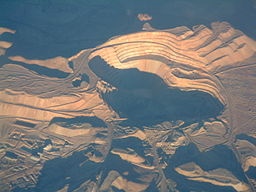
Chile May Make Miners Use Desalinated Water

Chuquicamata_copper_mine_chile (1)

Chuquicamata copper mine, by Owen Cliffe

With communities in Chile’s Atacama Desert — one of the world’s driest — competing with copper mines for dwindling water supplies, some of the country’s lawmakers have submitted a bill that would force mining companies to use desalinated Pacific Ocean water, according to reports in Bloomberg and Mining.com.

A statement from Chile’s Chamber of Deputies, the lower house of the National Congress, calls for mining companies that use 150 liters (40 gallons) of water per second to begin using desalinated water in order to preserve freshwater for other uses.  Some mining companies already use desalinated water, others don’t. There is no word yet on when the upper house, the Senate, will address the legislation.

One third of the world’s copper supplies comes from Chile, and one third of the Chilean government’s revenue comes from copper exports — making mining one of the country’s most important industries as well as one of its biggest users of water. According to a report in BNamericas, the industry’s need for water is expected to increase by 38 % by 2021.

Leave a comment

Filed under Desalination, Industry, Law, Oceans, South America, Water Shortage

Dec. 18, 2013: What’s in Your Water?

Water_pollution

Image: U.S. EPA

Today I’m posting a short roundup of international news about substances found in the water.

Hormone-disrupting chemicals found in water at fracking sites

A study of hydraulic fracturing sites in Colorado finds substances that have been linked to infertility, birth defects and cancer. (United States)

Ontario’s Grand River loaded with artificial sweeteners, study finds

It’s so chock full of artificial sweeteners that scientists say the chemicals can be used to track the movement of treated waste in the region’s municipal water supplies. (Canada)

Communication, cooperation key to water issues in Africa and Asia

Despite radically different cultures, climate, geography, and levels of government involvement in improving the lives of its citizens, Ethiopia, India, and China all face similar issues of water sanitation and hygiene. (Africa, Asia)

EPA drills wells to test groundwater contamination

As scientists home in on the source of contamination near Texas’ Donna Reservoir Superfund site, they drilled new wells this week to test the groundwater. (U.S.)

Pollution takes a toll on aquatic life in 150 river stretches

Discharge of untreated water in India has left 150 river stretches across the country too polluted to support any aquatic life. (India)

Judge approves $165 million settlements in Passaic River pollution case

A New Jersey judge has approved a pair of settlements worth $165.4 million to the state from nearly 300 companies, towns and public agencies accused of polluting the Passaic River. (U.S.)

Leave a comment

Filed under Asia, Environment, Law, North America, Pollution, Rivers and Watersheds

The Intersection of Environmental Issues and Human Rights

Image

The Future of Human Rights Forum, based in Geneva, Switzerland, marked International Human Rights Day, aka the 65th anniversary of the UN General Counsel’s adoption of The Universal Declaration of Human Rights, with a special event: its inaugural forum. The event is meant to bring together various experts, civil society organizations, journalists and members of the public to discuss innovation in response to issues of concern regarding human rights.

As a Geneva-based journalist learning about water and reIated environmental concerns, I attended the forum’s opening remarks and this morning’s discussion, entitled “Placing the Environment on the Human Rights Agenda.” It was interesting to hear the first speaker of the day drop a tantalizing tidbit in anticipation of the panel. John Pace, former head of the Research and Right to Development Branch of the Office of the High Commissioner for Human Rights, referred to the relationship between environmental issues and human rights as “a bit of a hot potato for some of us.”

Listening to the panel discussion that followed, I could understand why the topic is controversial, and why it stands to remain so for some time. There is a lot of history behind human rights development and documentation, and finding the best ways to include environmental issues will be tricky. How central can environmental issues be to human rights in general? How do experts get the language right, when modifying documentation, to ensure clarity? Can the the concept of “ecocide” as a crime gain urgency behind a public mandate and become part of the law in more countries?

The panelists: moderator Nicola Spafford Furey, vice president of Earth Focus Foundation; Polly Higgins, chairwoman, Eradicating Ecocide Global Initiative; Gonzalo Ovideo, senior advisor for social policy, International Union for Conservation of Nature; Jorge Vinuales, Harold Samuel Professor of Law and Environmental Policy at the University of Cambridge.

This blog is focused on water, which was not a main topic of the discussion, but it was used as an example that gives a sense of the scope of some of the issues discussed regarding the overlap of environment and human rights. Oviedo, echoed by Vinuales, mentioned two schools of thought: (1) people who want to protect humans from negative environmental impacts, such as toxic waste, and (2) people focused primarily on procedural environmental rights developed in the past 20 years (e.g., through the Rio Conventions).

“Something in the middle is missing,” Oviedo continued. “I think what is missing is a stronger, better way of understanding the way in which the environment is really at the bottom, is the basis of, human rights. Think of the right to water. Water comes from the function of ecosystems. If the ecosystems that ensure the cycle of water are lost, what are we going to do with the right to water? I feel we have the tools at hand today to make the environmental agenda stronger. We just have to use [them] in a more creative way.”

The focus of much of the discussion, as well as audience questions, was on Higgins’ area of expertise, the Eradicating Ecocide Environmental Initiative. It’s an intriguing idea, that destruction of ecosystems could become an international crime. In fact, it’s on the books in 10 countries, Higgins said. The term itself, first coined in a 1972 research paper, still seems little-known, but could be poised for greater fame. Read more about its history, existing laws, and more on the initiative website.

Image: The Future of Human Rights Forum

1 Comment

Filed under Environment, Events, Human rights, Law, United Nations